
Permission to Enter
Cuba always tries to control the context

StandFast #31
When my old employer, The New York Times, published a long article last week detailing the ways Cubans have been contending with Washington’s latest round of sanctions, the newspaper did something unusual. In movies and television programs, it’s called breaking the fourth wall. That’s when Amy Poehler’s character on “Parks & Recreation” looks right at the camera and shrugs, or when she speaks directly to the audience. The Times’ article was headlined, “Cut Off From Fuel, Cuba Is Still Surviving,” and the anything-but-failing news organization crowed up front that its journalists had just spent a week on the island on the first journalism visas granted to New York Times staff in nearly eight years.
The key word in that explanation is “granted.” This means the Times journalists had to ask for permission to enter Cuba to do their job. In other words, under this system of control, reporters can work in Cuba only when officials in Havana decide to let them in.
In a subsequent article where the Times opened up and told “the story behind the story,” the newspaper turned the camera on itself again and interviewed its own journalists, repeating the statement that they had been “granted” visas that this time were described as being “the first time in seven (not nearly eight) years.” The correspondent described how he had met with Cuban officials in Mexico City, Havana, Washington and New York for six months trying to “persuade them that we would tell this story fairly.”
What does a fair article look like? Fair to whom might be another way of asking. Fair in the eyes of the people who have the power to “grant” permission? Or fair to the Cuban people and to American readers who care about what is going on there?
Having been through this routine myself, I expect the correspondent started out six months ago when President Trump cut off the oil supply and predicted that Cuba would soon fall. The Timesman probably put in for a regular visa, and then, as the months of the sanctions went on, specifically described a reporting project to tell how Cubans were faring, looking for the angle the Cubans would accept.
When the Cubans decided to “grant” the visa, the correspondent, a videographer and a photographer, flew to Havana and met with officials there “a few times.” Although they say they were otherwise left on their own, travelling freely and speaking to whomever they wanted, that seems a stretch, considering the notorious reputation of the Cuban security apparatus.
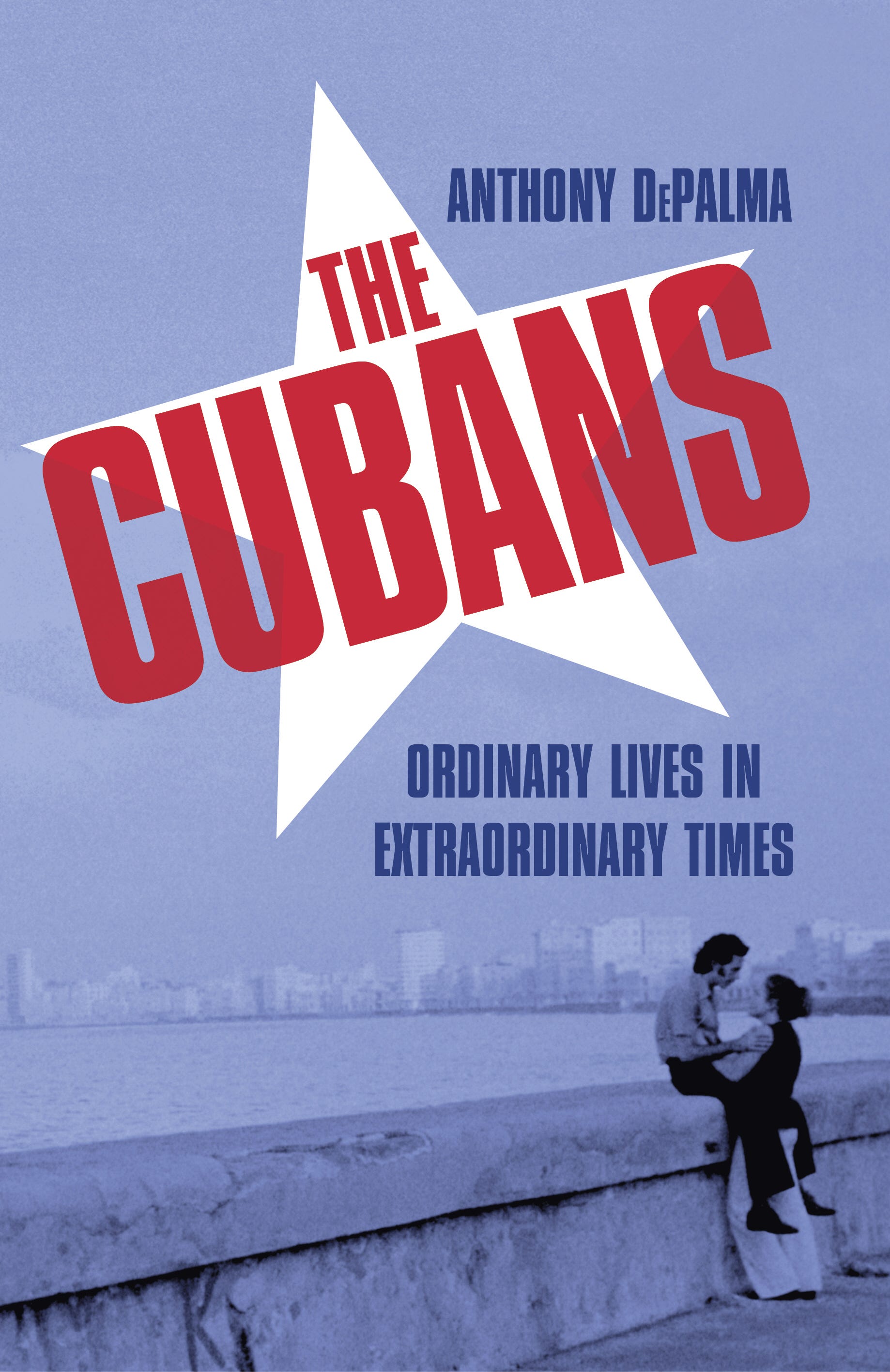
The resulting article in the Times testified to the resilience of the Cuban people, the singular trait of “Cubanidad” that was at the heart of my book “The Cubans: Ordinary Lives in Extraordinary Times.” As I detailed in its pages, the Cubans’ ability to adapt to any emergency—a reality of their existence throughout the nearly 70 years of the Castro era—is at once their greatest strength and their most perilous trap.
They’ve shown countless times that they know how to subvert shortages. In more than 40 years of reporting from Cuba, I’ve seen them do incredible things. During the “Special Period” of the 1990s, they turned grapefruit skin into a meat substitute. Once I got a flat on the central highway and watched a local man patch the tire with a piece of bicycle inner tube melted onto the hole with an automobile piston that he heated in his kitchen oven. In the 2010s, I watched them work around government censorship by importing news on flash drives that got endlessly reproduced. And just about every decade since the Castros took over in 1959, the’ve found ways to flee the island on makeshift rafts and hijacked ferries even when their own government has shut the doors.
And yet, that ability to “resolver,” to adapt and make do, has also taken some of the fire out of their bellies. Instead of demanding change, they look for ways to cope that don’t put the little they have at risk by speaking out against the government. They all know what happens to people who don’t conform. In July 2021, the government reacted furiously to street protests, jailing thousands. Just last month, well-known dissident Luis Manuel Otero Alcantara was released from prison and sent into exile after completing a five-year sentence on charges of contempt and public disorder, even though he never took part in the July 11, 2021 protests, the largest in 30 years. He was arrested after simply posting a video announcing that he was going to participate in the protests.
It’s no surprise that the Times journalists came back after a week there with a story about Cuban resilience. They described the actions of an innovative soul who found out how to convert plastic chips into alternative fuel. For the most part though, the reporters focused on those who were coping best with the U.S. sanctions with financial help from relatives in the U.S. who were sending money to buy lithium batteries, gas generators, and solar-powered carts, gently pointing out how this exposes Cuba’s inequality.
The Times correspondents interviewed no political dissidents, visited no decrepit Cuban hospitals, trudged through no streets knee deep in uncollected garbage, walked up or down no pitch black stairs with any miserable Cuban family living in a multi-story building without electricity. And they brushed off the most prominent symbol of Cubans’ dissatisfaction—the cacerolazos (pot banging) that erupt almost every lightless night across the country. Here’s what they wrote: “Exhausted Cubans told us they were angry at both Havana and Washington. Yet no one said they planned to take to the streets. Aside from banging pots and pans, the Cuban people have hardly staged protests.”
In fairness, since the Trump crackdown on Cuba began early this year, the Times has written extensively about dissidents, failing hospitals and the travails of everyday life on the island. Those were done with freelancers on the ground in Cuba and correspondents collecting the information in bureaus outside Cuba. Last week’s article was meant to stand out because the correspondent was there in person to portray a courageous and resilient people doing their best against long odds. Cuban officials must have considered it a positive report, even a fair one that showed President Trump that his policy is failing. And that’s most likely why, after seven or eight years, they “granted” the visa now.
Of course, once the Times journalists left the island, the Cubans had no control over what they’d write. But here’s the thing. Remember that word I highlighted earlier—granted? There’s a certain quid pro quo in this journalistic pas de deux that goes something like this: I’ll give you what you want as long as you don’t write what I don’t like. It may not be overt censorship, but Havana retains all the power, especially when the Times is willing to make such a big deal about finally getting their visa.
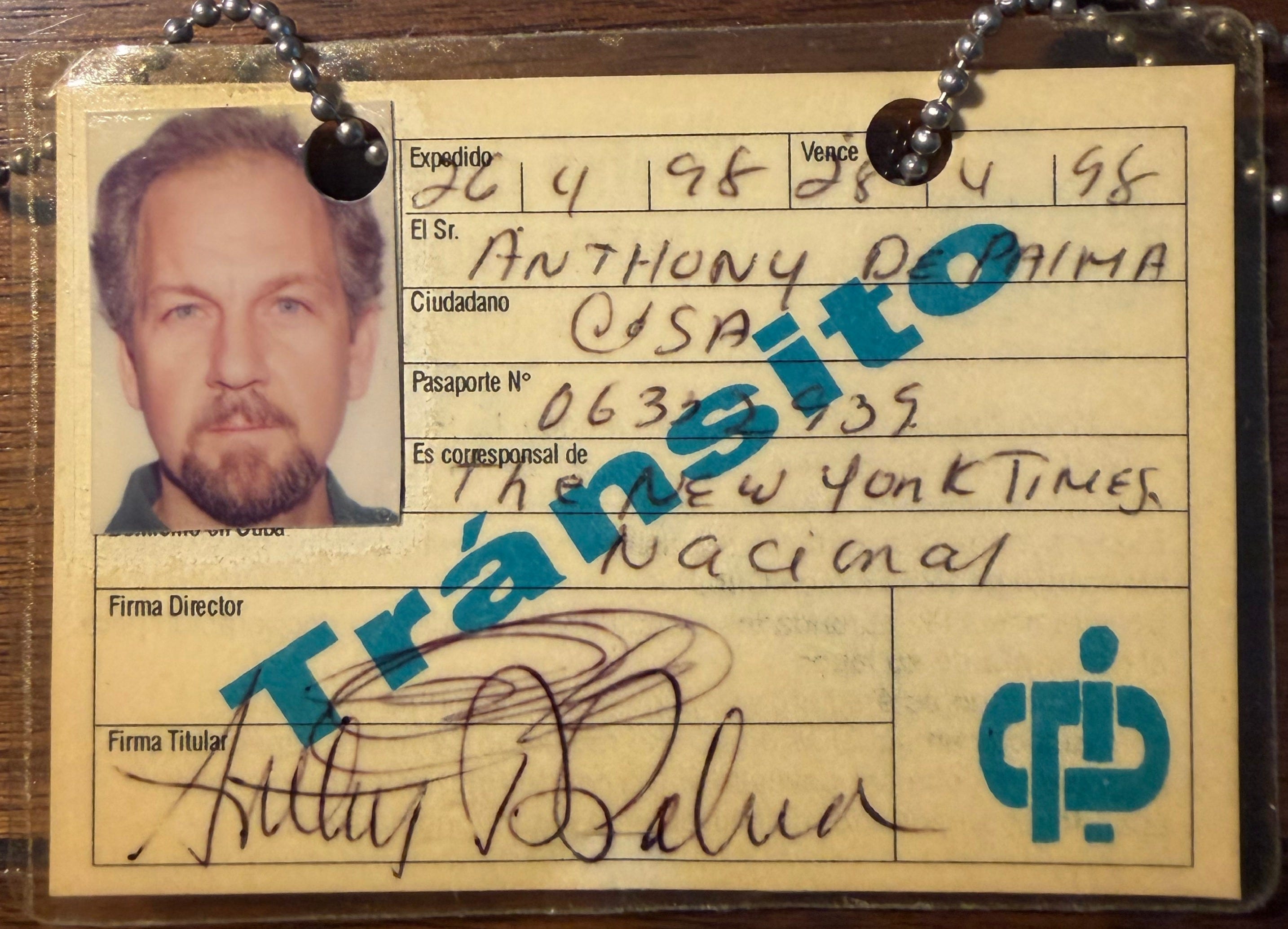
When I was a foreign correspondent at the Times in the 1990s, I met with my editors about Cuba. At the time, CNN was opening its own bureau there and I thought we might do the same. The Times hadn’t had a Havana bureau since the Cubans shut it down and expelled our resident correspondent, Ruby Phillips, during the missile crisis in 1962. I was told that The Times wouldn’t be opening a bureau because doing so would mean that we’d be obliged to toe the Cubans’ line or risk being shut down and forced out again.
Although I was disappointed by my editors’ tough stance because I wanted to be the Times’ Cuba correspondent, I later came to respect and admire their decision. And when I set out to write “The Cubans,” I kept all that in mind. I had left the Times by then. I worked on my book without consulting any Cuban officials, and for the sake of the many people I inteviewed over the course of several years in the ancient town of Guanabacoa, across the harbor from Old Havana, I did not want anyone from the government keeping tabs on them or me. I did not publish anything on Cuba until the book itself came out in 2020. The COVID lockdown started soon after, and it wasn’t until 2022 that Cuba was open again.
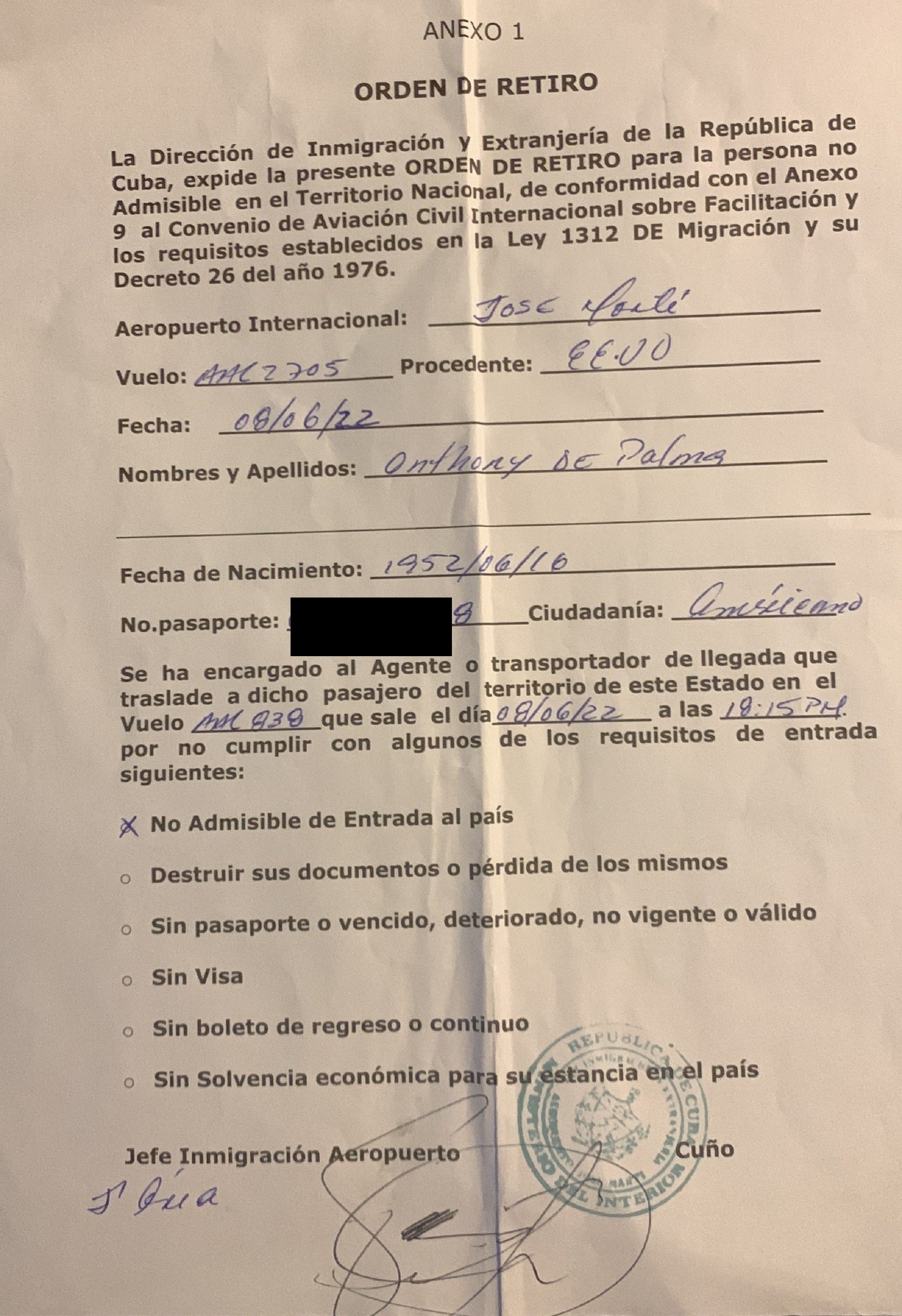
That’s when I flew back to Havana with several suitcases filled with medicine for the families I had profiled in the book. I got as far as the airport in Havana when I found out the cost of working the way I did. As soon as I presented my passport, officials pulled me out of the line, held me for several hours, and eventually marched me back to the airport gate and then right up to the door of a jet flying back to Miami. Only when I had entered plane did they hand my passport to one of the airline crew.
I do not doubt that Cuban officials did not like either what I wrote about Cuba in my book, or the way I reported it. That’s why they kicked me out, and why they will not “grant” me a journalist visa to return.
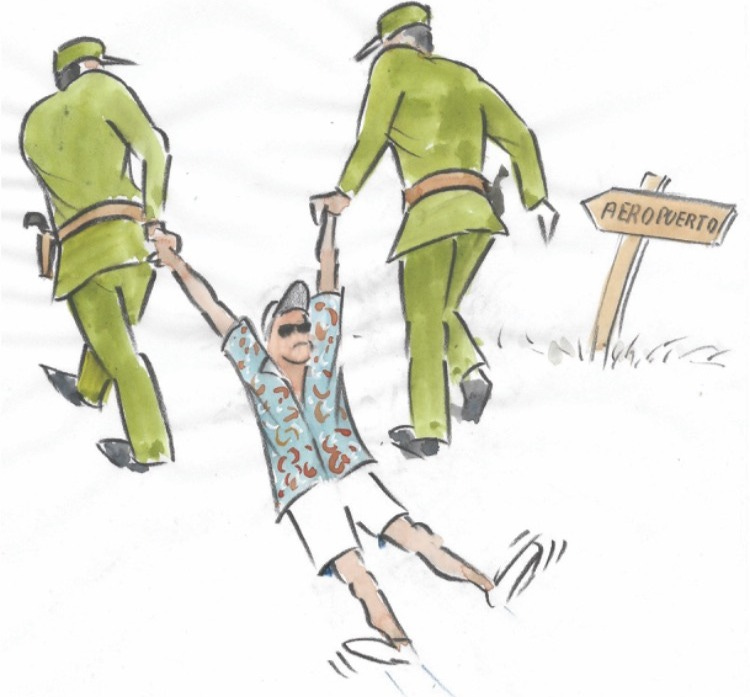
Drawing by George Karcich
So now, as an official persona non grata in Cuba, whenever I need to find out how the families I reported on are doing, I rely on snippets of conversation with them on WhatsApp, or on the occasional Facebook postings they somehow manage to complete.
What I hear from them is sad, and often distressing. But it’s not surprising to know once again that somehow, some way, they have figured out a way of coping.
That’s just what Cubans do, with or without permission.
It is sad. Maybe one day, it will get better. Hopefully.